Nano-Dispersion & Homogenization Solutions
Why Nanomaterial Dispersion Is Exceptionally Challenging
Strong van der Waals forces cause nanoparticles (like CNTs and Graphene) to form dense clusters. Standard low-shear agitators cannot provide sufficient localized energy to break these bonds.
Traditional high-speed bead mills or stator-rotor homogenizers often apply excessive mechanical impact, snapping high-aspect-ratio nanomaterials (e.g., cutting CNT length) and degrading electrical conductivity.
Abrasive nano-ceramics (Alumina, Zirconia, Silica) rapidly erode metal blades and bead-mill grinding media, introducing heavy metal impurities into high-purity battery or semiconductor pastes.
High-surface-area powders entrap vast amounts of micro-air pockets during charging, causing batch viscosity fluctuations, settling, and premature drying.
Measurable Quality Upgrades in Nanomaterial Slurries
Achieving true sub-micron de-agglomeration directly boosts the electrical, thermal, and mechanical performance of the final compound.
| Material Performance Impact | Standard Propeller Mixing | Berlon Planetary Nano-Dispersion | Performance Upgrade |
|---|---|---|---|
| Particle Agglomerate Size (D90) | 15 – 25 µm (Clumps remain) |
< 0.5 µm (Sub-micron level) |
🎯 98% Size Reduction |
| Electrical / Thermal Conductivity | Inconsistent network | 100% Uniform conductive path | ⚡ +45% Efficiency |
| Viscosity & Slurry Stability | High yield stress / Settling | Smooth Newtonian / Thixotropic flow | 💧 Long-Term Storage Stable |
| Impurity Contamination | High Fe/Cr metal wear | 0 ppm Metal Contamination | 🛡️ Semiconductor-Grade Purity |
How Planetary Centrifugal Technology Achieves Sub-Micron Homogenization
By rotating the container around two axes simultaneously, our technology creates intense internal fluid movement and high shear forces—without any blades entering the fluid.
Key Technical Advantages:
| Ultra-High G-Force Shear Acceleration | Simultaneous revolution and rotation subject the slurry to immense centrifugal g-forces, generating high velocity gradients that tear nanoparticle agglomerates apart. |
| Preserved Nanomaterial Integrity | Non-contact shear distributes kinetic energy evenly through liquid convection, de-agglomerating powders without breaking CNT aspect ratios or damaging graphene flakes. |
| 00% Non-Contact & Zero Contamination | Mixing occurs entirely inside disposable or custom containers. No blades, no grinding beads, and zero risk of cross-contamination or metal wear. |
| 1Simultaneous High-Vacuum Degassing | Gas adsorbed on nanoparticle surfaces is stripped away continuously under high vacuum, preventing re-agglomeration and ensuring void-free slurries. |
Planetary Centrifugal vs. Traditional Dispersion Technologies
| Feature Comparison | Bead Mills | High-Pressure Homogenizers | Berlon Planetary Vacuum Mixer |
|---|---|---|---|
| Dispersing Action | Media Impact & Friction | High-Pressure Orifice Shear | G-Force Fluid Shear + Vacuum |
| Metal Contamination | High (Media & Chamber Wear) | Medium (Piston/Valve Wear) | Zero (Non-Contact / No Blades) |
| Material Loss & Cleanup | High (Heavy hold-up volume) | Medium | Zero (Mixes in cups/containers) |
| Air Removal | Separate step required | Separate step required | Integrated Vacuum (2-in-1 Process) |
| Nanomaterial Damage | High (Crushes long fibers) | High (Extreme pressure) | Gentle High-Shear (Preserves structure) |
Engineared for High-Value Nanomaterial Formulations
Carbon Nanotubes (CNT) & Graphene Slurries
Conducting additives for Lithium-ion battery cathodes, flexible electronics, and conductive inks.
Thermal Interface Materials (TIM) & Conductive Pastes
Nano-silver pastes, Liquid Metal-filled silicones, boron nitride thermal greases.
Advanced Ceramic & Dielectric Suspensions
Sub-micron Alumina, Zirconia, Barium Titanate (MLCC), and Nano-Silica for semiconductor CMP polishes.
Pharmaceutical & Cosmetic Nano-Emulsions
Lipid nanoparticles (LNPs), nano-encapsulated active ingredients, transparent sunscreens.
Choosing the Right Nano-Dispersion System
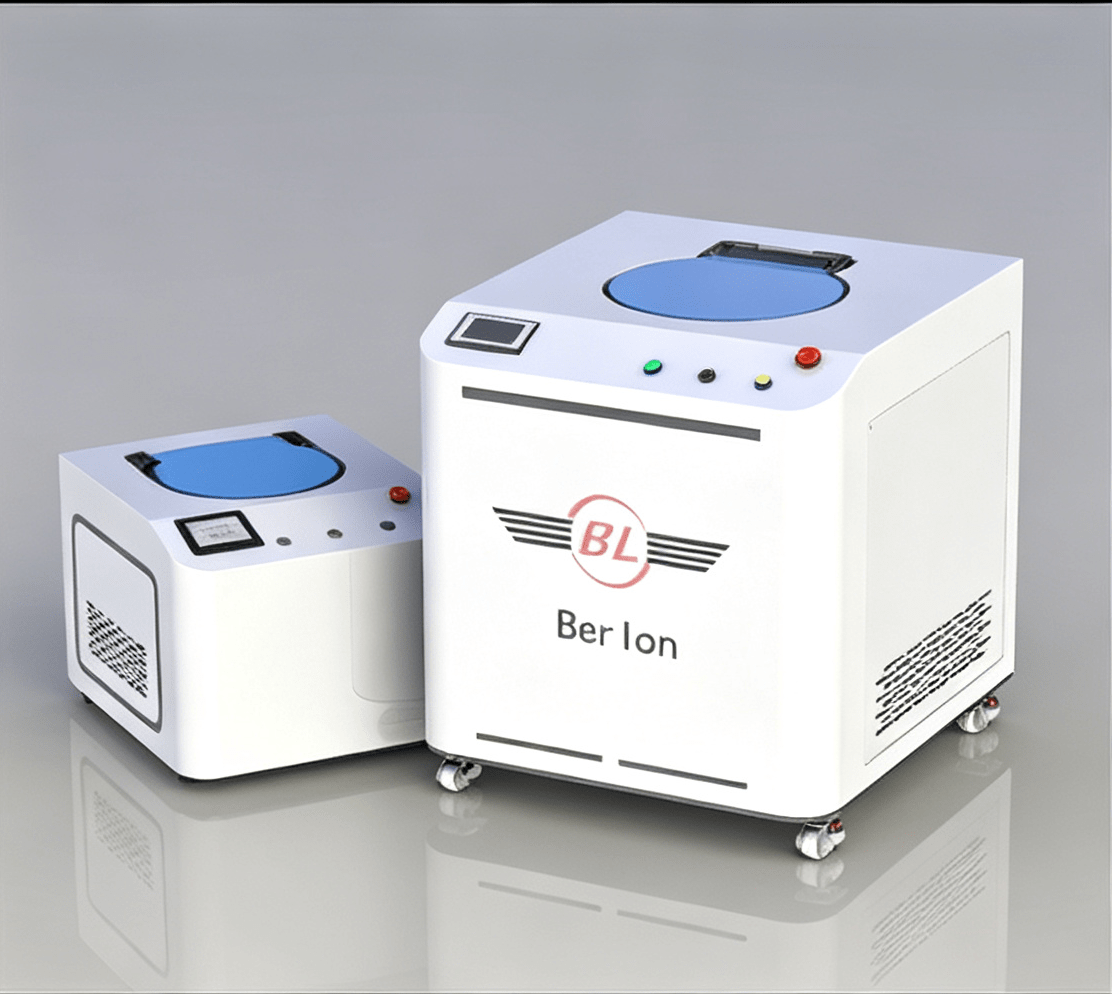
Planetary Centrifugal Vacuum Mixers (Lab to Mid-Batch)
Ideal For: R&D laboratories, high-value electronics, multi-cup/syringe processing with zero cleanup.
Key Feature: Independent speed adjustment, multi-step programmable vacuum cycles, custom container adapters.
Dual Planetary Vacuum Mixers (Industrial Mass Production)
Ideal For: Heavy-duty industrial production of silicone sealants, battery slurries, and structural adhesives.
Key Feature: Fully sealed vacuum vessel, heavy-duty wall/bottom scrapers, integrated high-speed dispersers.
Need Perfect Nano-Dispersion for Your Formulation?
Contact our technical engineers to optimize your rotation-to-revolution speed ratios or schedule a trial run.
Dealing with extreme viscosity pastes? Visit our High-Viscosity Mixing Solutions → page.
Need micro-bubble removal? Check out our Vacuum Degassing & Defoaming Solutions → page.
Frequently Asked Questions About Vacuum Degassing
Our built-in high-vacuum system achieves ultimate vacuum levels down to sub-atmospheric pressure (-0.098 MPa / -98 kPa or higher), ensuring sub-micron level gas removal.
Yes. For hazardous formulations containing volatile solvents (e.g., NMP, acetone, ethanol), we offer custom Explosion-Proof (C1D1 / Zone 1) configurations with positive pressure purging systems.
While traditional static ovens take up to 2 hours, our planetary centrifugal vacuum technology achieves complete mixing and micro-degassing in just 2 to 5 minutes.
Absolutely. We offer free material trial runs at our application facility. Send us your raw materials, and we will return the degassed samples along with a comprehensive process report.