
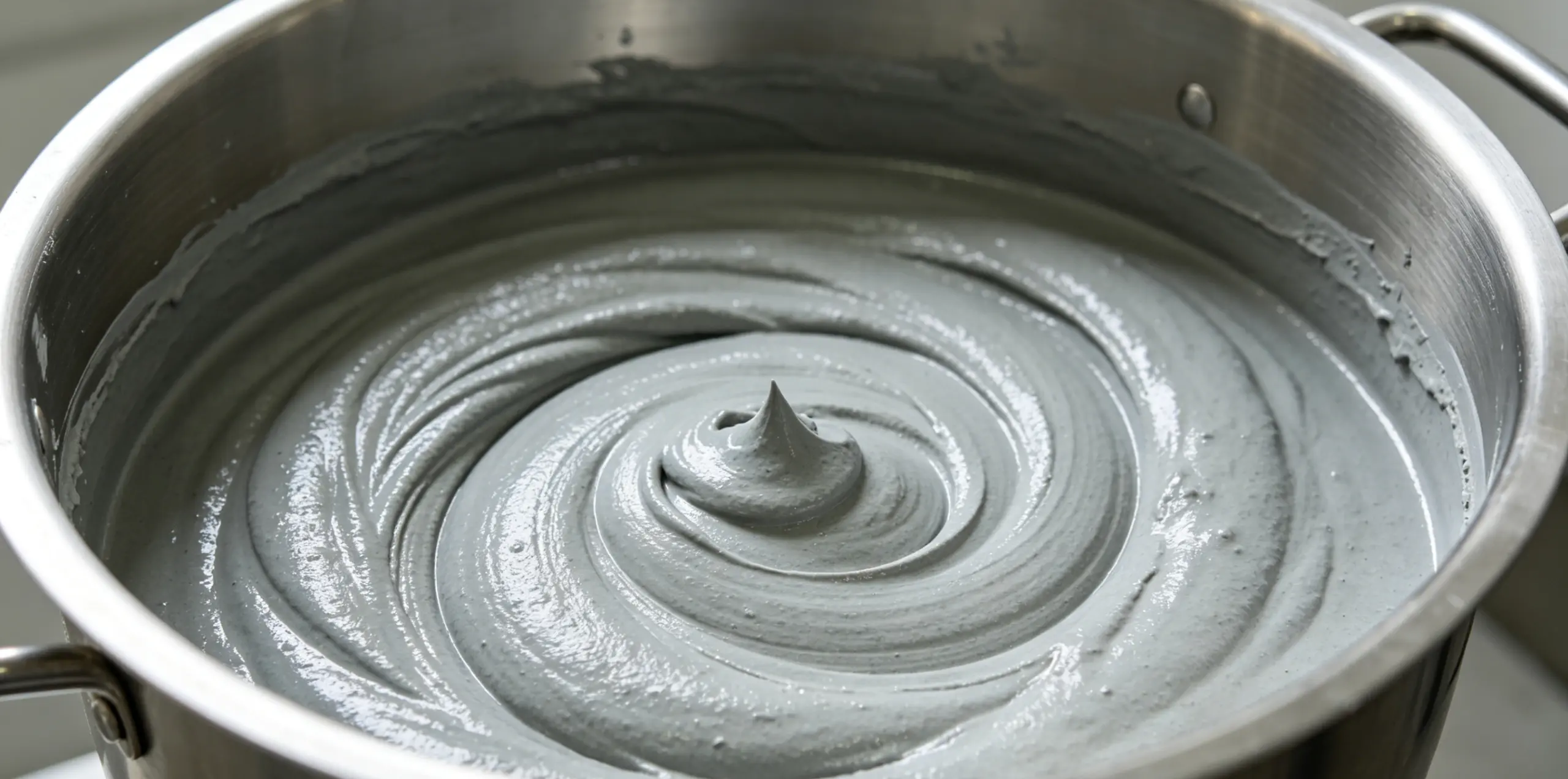
Lithium Battery Slurry Mixing & Degassing Solution

High-energy-density lithium-ion and solid-state batteries require flawless slurry preparation. Trapped micro-bubbles, active material agglomeration, and binder shear degradation directly lead to coating pinholes, uneven current collector adhesion, localized hot spots, and reduced battery cell cycle life.

Battery Chemistries & Slurries Handled

  • Cathode Formulations: Lithium Iron Phosphate (LFP), Nickel Manganese Cobalt (NMC), Lithium Cobalt Oxide (LCO), and High-Nickel chemistry pastes.

  • Anode Formulations: Natural/synthetic graphite, Silicon-Carbon ($Si/C$) composite anodes, and Lithium Titanate (LTO) slurries.

  • Conductive Additives & Binders: Carbon Nanotube (CNT) dispersions, Super P, graphene, PVDF in NMP solvent systems, and aqueous CMC/SBR binder solutions.

  • Next-Gen & Solid-State Materials: Sulfide, oxide, and polymer-based solid electrolyte slurries, along with Sodium-ion battery electrode pastes.

Industry Applications

  • Electric Vehicle (EV) Batteries: High-capacity prismatic, pouch, and cylindrical cell electrode manufacturing.

  • Energy Storage Systems (ESS): Long-cycle-life LFP battery slurry preparation for grid and industrial storage.

  • Consumer Electronics: Ultra-thin, high-density lithium polymer battery electrode slurries.

  • Solid-State & Next-Gen R&D: High-solid-loading slurries for solid-state separators, silicon anodes, and sodium-ion cells.

How Planetary Vacuum Mixers Solve These Issues

Processing Challenge Planetary Vacuum Mixer Solution Technical Benefit
Pinholes & Micro-Voids High-Vacuum Deaeration (-0.098 MPa) Removes sub-micron air bubbles completely, ensuring smooth slot-die coating and zero pinhole defects.
CNT & Filler Agglomeration Non-Contact High-G Centrifugal Shear Disperses CNTs and conductive carbon uniformly into viscous binders without breaking fiber aspect ratios.
High Viscosity Processing Blade-Free Dual Rotation (Revolution + Rotation) Easily processes high-solid-loading pastes (>75%) without dead zones, blade wear, or material clogging.
Slurry Gelation & Heat Low-Friction Hydrodynamic Blending Minimizes frictional heat, preserving PVDF binder integrity and extending slurry pot life for coating runs.

Recommended Equipment

Frequently Asked Questions (FAQ)

Q1: How does planetary vacuum mixing disperse Carbon Nanotubes (CNTs) without damaging their conductive network?

Traditional high-shear blades or 3-roll mills can crush long-chain CNT fibers, reducing their aspect ratio and electrical performance. Planetary mixers utilize fluid displacement and non-contact centrifugal shear forces to disentangle CNT bundles smoothly, preserving their aspect ratio and maximizing slurry conductivity.

Q2: Why is deep vacuum deaeration essential before the slurry coating process?

Even sub-micron air bubbles expand during the drying tunnel phase of roll-to-roll coating, causing pinholes, cratering, and poor active material adhesion to copper/aluminum foils. Vacuum deaeration down to -0.098 MPa guarantees a dense, void-free slurry, yielding uniform electrode thickness and preventing internal short circuits.

Q3: Can planetary mixers handle high-solid-content cathode slurries (e.g., >75% solid loading)?
  • Yes. Because the mixing action is driven by dual-rotation centrifugal forces inside a sealed container rather than rotating blades, high-viscosity pastes and high-solid-content slurries are forced to fold and blend continuously, achieving complete homogeneity without stalling or blade wear.