
Blog
How to eliminate pinholes

How to eliminate pinholes & air bubbles for Lithium battery electrode coating?
-Advanced Mixing & Degassing Solution for high-precision materials
Are You Facing These Problems?
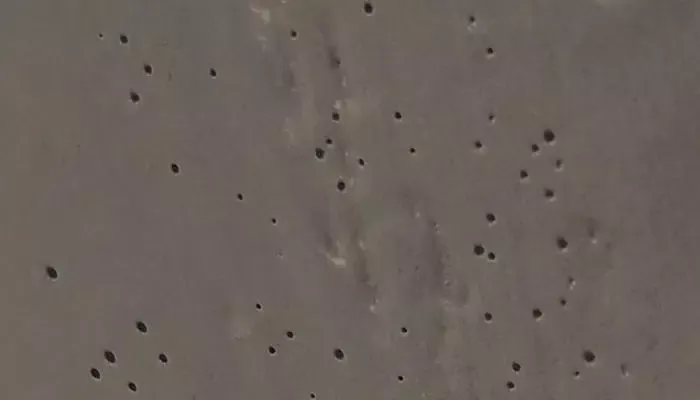
Pinhole appearing in thin films or coating
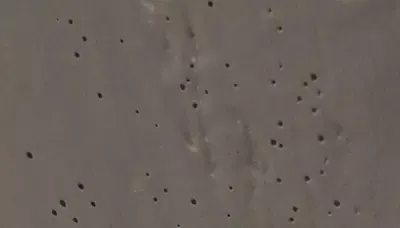
Invisible micro bubbles causing defects
Air introduced during high-speed mixing
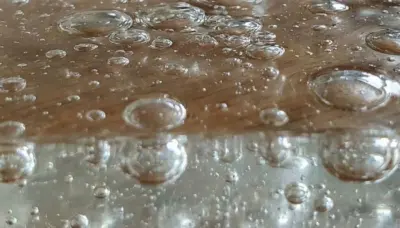
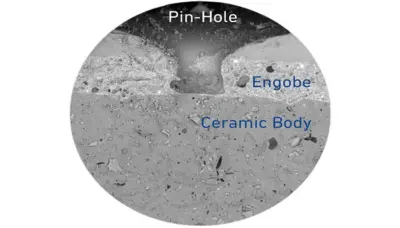
Bubbles expanding after dispensing or curing
Inconsistent product quality between batches
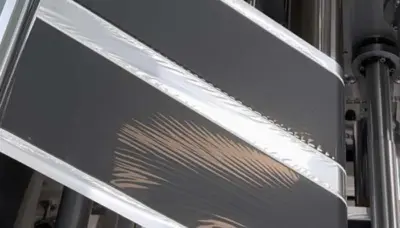
Common in:
Tape casting(ceramic slurry)
Lithium battery electrode coating
Precision dispensing (underfill, encapsulation)
WHAT CAUSES PINHOLES & BUBBLES?
The issues is not just “mixing”-It is air management.
- Air Introduced During Mixing
Traditional blade mixers trap and inject air into material
- Micro Bubbles Remain Inside
Bubbles smaller than 50μm are invisible, but become defects in thin layers.
- High Viscosity Prevents Bubbles Escape
The thicker the material, the harder it is for bubbles to rise naturally.
- Process Mismatch
High speed-air entrainment & separation
Low speed- insufficient degassing
Our Solution
Introduction
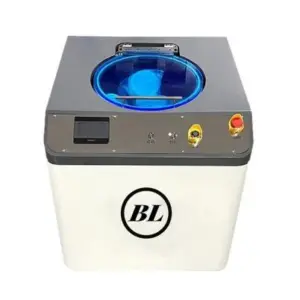
- No blade or impeller
- No “air whipping”effect
Prevents bubbles at the source
Powerful Vacuum Degassing
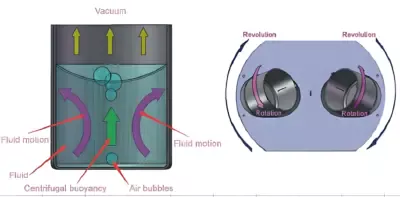
- Vacuum expands trapped bubbles
- Bubbles quickly rupture and escape
Removes even micro bubbles
Centrifugal Force Acceleration
- High-speed revolution generates a strong force
- Drives bubbles out of the material
Much faster than a natural setting
Step Programmable Mixing Process
Our system allows you to set up to 5 independent mixing steps in one cycle:
- Different speed (RPM) for each step
- Adjustable time for each stage
- Flexible process design for different materials
Enables precise control from pre-mixing → dispersion → degassing
Simultaneous Mixing & Vacuum Degassing
Unlike conventional systems:
❌ Mix first → then vacuum
❌ or vacuum only at certain stages
✅ Our system supports:
Mixing and vacuum at the same time-Why This Matters
- Prevents air from being reintroduced during mixing
- Removes bubbles continuously during the entire process
- Significantly improves degassing efficiency
- Ideal for high-viscosity and bubble-sensitive materials
|
Item |
Conventional Mixing |
Our Technology |
|---|---|---|
|
Mixing Steps |
Single/Manual |
Up to 5 programmable steps |
|
Vacuum Mode |
Separate/Limited |
Continuous & simultaneous |
|
Air Introduction |
Likely |
Avoided |
|
Degassing Efficiency |
Medium |
High |
|
Process Control |
Limited |
Precise & repeatable |
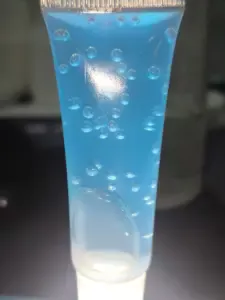
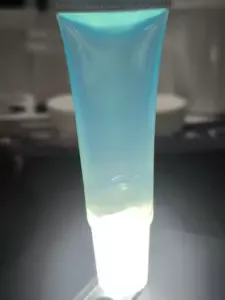
Before VS After
Real Client Test: Before & After Comparison
Typical Application
- Ceramic Tape Casting
- Lithium Battery Slurry
- Semiconductor Packaging(Underfill/Encapsulation)
- Adhesives & Resins
- Conductive Paste/ Silver Paste
Recommended Mixing Process
Instead of fixed or manual operation, you can design a complete automated process:
Step 1 – Gentle Pre-mixing
Low speed (300–500 rpm)
→ Avoid air entrapment
Step 2 – High-speed Dispersion
Medium to high speed (800–1500 rpm)
→ Achieve uniform mixing
Step 3 – Simultaneous Vacuum Mixing
Mixing + vacuum ON
→ Remove bubbles during mixing
Step 4 – Deep Vacuum Degassing
Maintain vacuum
→ Eliminate micro bubbles
Step 5 – Stabilization
Low speed or rest
→ Ensure final material consistency
All steps completed automatically in one cycle
What You Will Achieve
- Bubble-free materials
- No pinholes in thin films
- Higher production yield
- Stable and repeatable quality
- Reduced rework and material waste
Still struggling with pinholes or invisible bubbles?
- Material testing
- Process optimization
- Customized mixing programs


